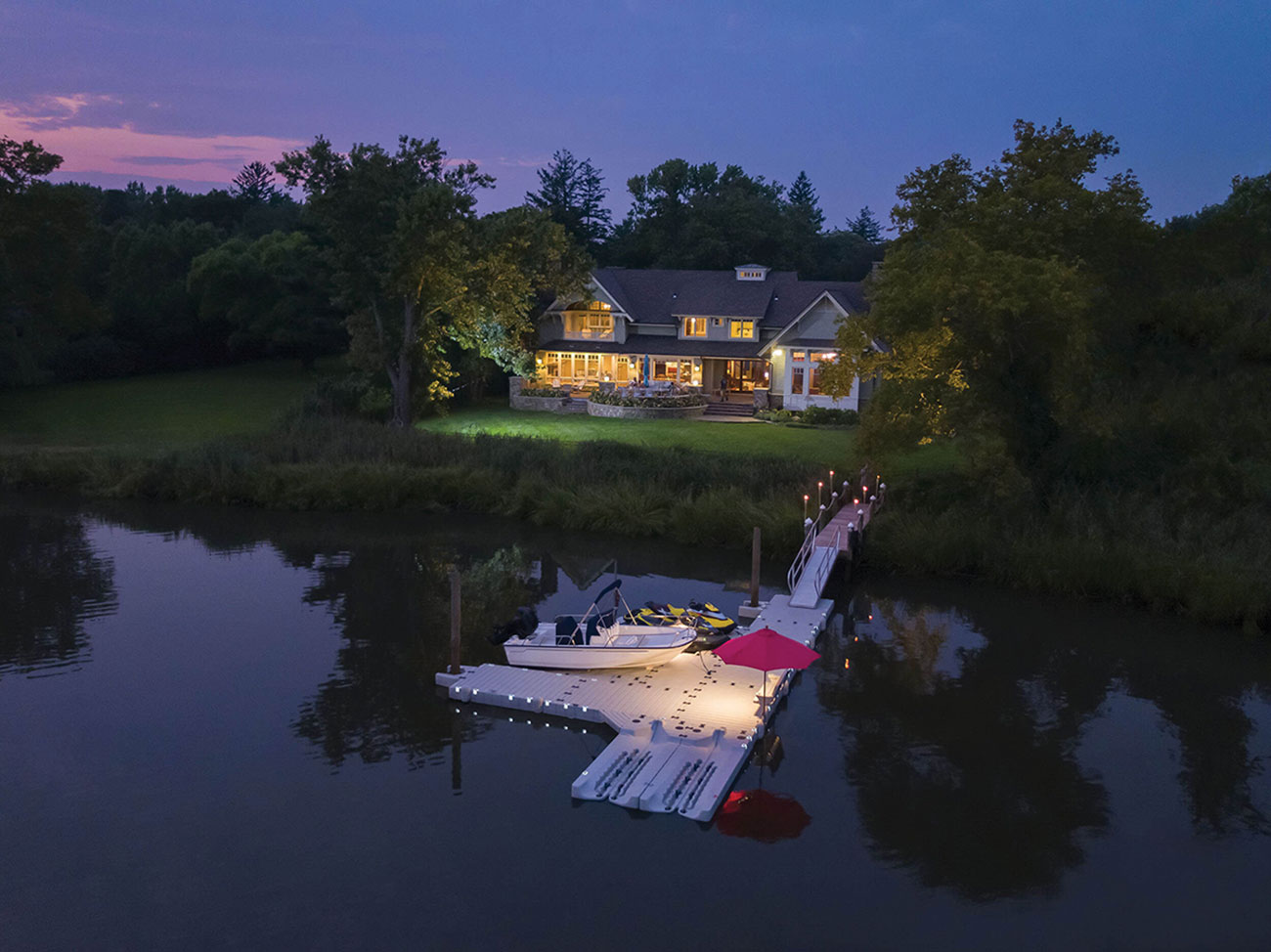
For waterfront homeowners who want a suitable marina extension, the best floating docks in Florida are almost always modular systems made from UV-stabilized polyethylene. Waterfront living in Bayonet Point, New Port Richey or Tampa, Florida, offers great views and access, but your dock endures constant sun, salt and storms. Not every material withstands these conditions, and choosing the right one can save time, money and frustration.
Why Florida’s Environment Is Tough on Docks
The Gulf Coast is an unforgiving place for waterfront structures. Some materials may appear solid at first but deteriorate quickly, requiring more frequent maintenance.
Constant sunlight leads to fading, brittleness and cracking. UV exposure weakens wood’s structure — a phenomenon that also occurs in traditional docks and affects their appearance. Saltwater accelerates corrosion and material degradation, as metal components rust and untreated surfaces degrade faster.
Add humidity and rain to this, which makes everything damp and encourages mold, mildew and rot, especially in traditional wooden platforms. When storms and rough tides hit, the strong winds, changing water levels and boat wakes can test just how strong your dock really is. All this makes material choice and design more crucial to maintaining a secure and enjoyable waterfront property than you may realize.
What to Look for in a Floating Dock in Florida
Floating docks are made from various materials, and some may not withstand the Sunshine State’s climate well. Material considerations matter, especially if you want an investment that lasts with minimal maintenance.
Resilience to Saltwater and UV Exposure
The material itself does most of the heavy lifting. High-quality polyethylene stands out because it resists water absorption and degradation, and won’t corrode like metal. UV stabilization can help it resist fading and structural damage caused by constant sun exposure. The combination makes a noticeable difference over time, as you avoid the gradual breakdown that happens with less durable materials.
Stability Underfoot
A dock should feel stable under your feet, whether you’re stepping on it for a quick tie-up or spending an afternoon docking and undocking your personal watercraft. Trust comes from knowing the system features quality engineering and design. Larger, well-connected sections create a more consistent surface, while a strong connection system keeps movement controlled instead of loose or uneven. This is especially important in areas with boat traffic and changing conditions, such as high or low tides.
Storm-Ready Design
Florida is prone to stormy seas and sudden weather changes. A dock needs to move with the water to remain intact. Strong connectors and a flexible design absorb movement rather than resist it. Homeowners often prefer resilience, which is why they may choose a buoyant system over a fixed dock.
Maintenance Profile for Long-Term Convenience
Traditional platforms often require ongoing maintenance like sanding, sealing and replacing boards due to moisture and sun exposure. Modern water-supported systems reduce that workload. With the right material choice, maintenance usually comes down to the occasional cleaning to remove dirt or algae buildup. The convenience of simply hosing it down rather than applying protective coatings really matters in a climate where wear happens quickly.
Customize the System to Fit Your Property
Every waterfront is a little different. Dock shape, shoreline layout and how you plan to use the space all affect what works best. Modular docks provide flexibility. You can build a layout that suits your property now and adjust it later if you need to change or if your watersport passions evolve. Whether you add a platform, extend the walkway or create space for different watercraft, a dock should grow with your aquatic pastime.
Float Confidently With EZ Docks
EZ Docks is a leading dock manufacturer that consistently prioritizes resilience and durability. Its system is built specifically for environments like Florida, where low maintenance matters from day one. The brand uses thick, high-density polyethylene that resists both saltwater and UV exposure. This protection runs through the material itself rather than just coating the surface, so it holds up over time without peeling or fading.
The company’s modular design connects with a patented system that creates a stable, unified platform. Instead of separate pieces shifting independently, the dock locks into a single structure, which helps it feel more secure underfoot.
Longevity is a key consideration. These units are designed to last for years with minimal upkeep, reducing the long-term cost of ownership compared to alternatives that need regular repairs or replacement. Plastic and composite docks are highly preferred options for water-supported systems because they don’t warp and have superior weather resistance, resulting in much longer useful lifespans.
EZ Docks offers a 10-year warranty — longer than many alternatives — which reflects confidence in how the system performs in real-world conditions. Support also plays a role. Installation help is available if you need it, and the dock is straightforward enough for many homeowners to assemble in simple setups.
Frequently Asked Questions About Saltwater Floating Docks
Learn more about why buoyant dock designs matter.
What is the best material for a floating dock in Florida?
UV-stabilized polyethylene is one of the most reliable options. It resists saltwater, doesn’t rot and requires very little maintenance, which is why a supplier like EZ Docks is such a popular choice.
How do floating docks handle storms?
Buoyant systems move with the tide instead of resisting it. That flexibility reduces stress during storms and helps the structure stay intact when water levels rise or waves increase.
Do floating docks require a lot of maintenance?
UV-stabilized polyethylene materials used in floating systems require very little upkeep. Most only need occasional cleaning to remove buildup. There’s no need for sanding, sealing or replacing rotten boards.
Can you install an EZ Docks system yourself?
Many modular systems are designed for straightforward assembly. Smaller layouts can often be installed without professional help, which makes this ideal for homeowners who intend to expand their systems incrementally.
Make the Most of Your Waterfront
A dock is a long-term part of how you use your bay or marina area. In Florida, materials and designs that can handle the environment with minimal maintenance affect your dock selection. Well-built floating docks give you a stable, durable space that holds up season after season.